Tuesday, December 10, 2013

Event Blog 4: James Welling, Monograph

The entrance to the exhibit.
My ticket.
Another selfie in front of the end white supremacy sign.
I honestly need to take a second to fangirl over this exhibit. I am a photographer. I am also very picky about the type of photography I like. So when I like someone's work, it means I really like it. James Welling's art is exactly that. Even though not everything he's done is to my liking (the train track pictures), the Glass House series and the Miason de Verre series (which means glass house in French) were stunningly beautiful and exactly what I hope to be as a photographer in the future.

In these photos Welling aimed to portray the Maison de Verre how he saw it- as a oppressive, sad place. In order to properly portray this he manipulated the photos using digital technologies. To me photography is, at its core, about manipulation- manipulating a place, a time, a memory. With technologies available to us such as Photoshop this became a very easy thing to do. Now photographers can shape the world and the past to be whatever they want it to be. The Maison de Verre was meant to be a beautiful, airy place filled with light but Welling made it into something unsettling.

His Glass House series completely blows everything I've done out of the water. Spanning over three years Welling visited this house to take photos of it with different colored filters during different seasons to get an array of beautiful images. Here are some of the results.

81670775
74840696

The Glass House is a work of art itself but Welling just adds another dimension to it. This series got me thinking about reality. Reality is subjective and at the mercy of the perceptions of an individual. We all live in different realities. Things such as photographs are, on the surface, meant to show reality as it is but they do not. Imagine someone asked Welling what the Glass House looked like. Which picture would he show them? All these pictures show something different and make the building and the area around it look like a completely different place. What then does the Glass House really look like?

Science is meant to give us objective truths of our world but it can be just as easily manipulated as a photograph. People will see evidence in the way they want to see it. This is easy to see in how science has changed throughout time. I mean hell, people used to think our galaxy was geocentric and many people refused to believe otherwise because of religious backgrounds. Science and art are one in the same in that they are at the mercy of their masters.

Event Blog 3: The Cardiac Dance. The Spirals of Life

Outside the event.
Me with Dr. Buckberg and my roommate.
The room the lecture was held in.
This event was all about the heart. Dr. Buckberg described to use the extensive research he, and many others before him, have done on the heart and the amazing new things they discovered. He told us how so much of what we do and build (and even the structures of our buildings) are based on nature. "Nature is simple, scientists are complicated." While the heart was originally thought of as a complicated series of knots and muscular ingenious, Buckberg showed us that it is actually just a simple spiral. It can be twisted and untwisted very easily. This design and the overall football shape of the heart makes for a uniquely efficient organ that is able to provide oxygenated blood for an entire body.

A still from The Cardiac Dance

The artistic aspect of the representation was a dance performance that students choreographed in line with these discoveries on the heart. It showed how a properly working heart twists to pump. It then went into heart disease and the basketball shape that an unhealthy heart goes into. Finally, the performance ended with a symbolic open heart surgery (something made easier ever since the realities of the heart have been discovered).

I just described what this lecture was literally about. However, there was something more subtle to learn from Dr. Buckberg's event. It shows what paradigm shifts can do to a community, be it artistic or scientific. Sometimes certain beliefs are held so deeply that even when something is found to be undeniably true people will reject it because of already established rules. One example of this comes from my sociology of gender class I took last year. Many people thought that during fertilization, the sperm is the only active one and the egg is completely passive just waiting to be penetrated (due to gender stereotypes of men and women). Scientists soon discovered that the egg actually does some of the choosing as well and is discriminatory against certain sperm. Many scientists, however, don't acknowledge this fact and still go by the very traditional system of a penetrating sperm.

Art works to cause paradigm shifts and bring in new ideas that people would otherwise reject. Art questions the unquestionable. I think not as many people realize this fact as they should. That is what I learned from this lecture.

Monday, December 9, 2013

Event Blog 2: GLOW


Personally, there is nothing I hate more than a passive art exhibit. I feel today there are so many exhibits that are simply meant for patrons to go through, look at with their eyes, but not contribute to with their thoughts or even their actions. Art is a relationship between artist and audience and relationships are a two-way street. In going to the GLOW exhibit in Santa Monica I found an artist who shares my sentiments.


Karen Atkinson understands the plague of passivity perfectly. Atkinson's piece was a constantly changing experience that really reflected reflected the conversation between technology and art. At first glance her piece simply looked like a wall. However, when a light was shone on the wall it would glow for a few seconds before disappearing. This allowed people to draw pictures using cellphone flashlights that would appear for a few seconds and then vanish into oblivion. As a photographer I know what light painting is but this was something different. This was light graffiti.


But it didn't stop there. Every couple minutes or so, a giant light would pan over the wall from top to bottom. Anyone who was standing in front of the wall would cast a shadow on the wall and then this shadow would also stick for a few seconds (just like the light). Atkinson created this dynamic relationship of ever-changing light and shadows that danced alongside one another all night long. The relationship between light and dark has been explored for centuries. They are opposites but one cannot exist without the other. In this way Karen is illuminating the necessity for both.


However, after actually talking to Ms. Atkinson, my roommate and I learned a completely new dimension to the piece. She discussed how she was trying to show the importance history has on modern culture. In the same way that traces of previous people's light strokes or silhouettes stayed on the wall, shadows of the actions of those who lived before us still affect our daily lives. She used modern technology to create an art piece that really has a statement to make on basic human society. The artist herself was even surprised at how interactive people were with the piece. She told us how at one point you  couldn't even reach the wall because so many people were around it. Also, many people used the wall in ways that she did not predict. This even further examines how an interactive relationship between artist and audience can cause an art piece to evolve beyond what it was originally intended to be (just as how technology is constantly evolving). I thought to myself, "Absolutely brilliant." Of course there were other artists at the GLOW show but none of their stuff hit me like Karen Atkinson's did. 

Event Blog 1: Forrest Bess, Seeing Things Invisible

The entrance to the exhibit.
A picture of me in the courtyard of the Hammer. End white supremacy!
My ticket to prove I was there.

I walked into Forrest Bess' gallery at the Hammer Museum and internally groaned. I knew it was the type of art I don't really like. There were lots of abstract shapes with color palettes I don't usually run towards. The painting style was not precise and many of the paintings just did not seem to have any point to them. However, this is when I learned the importance of background information and how Bess' works tied in with our class.

Forest Bess' paintings were works inspired by medical injury. After being beaten by his fellow army officers for being homosexual, Bess' doctor encouraged him to paint the visions he saw as his head healed. The second I read that, I started thinking back to our unit on medicine and art. Although not a traditional procedure or daily pill, art itself is medicine. Stress has been shown to hinder a person's recovery and if art is available and able to lower a patient's stress levels, it may help with their recovery. Bess also had the ability to reach a mental state that many artists today try to reach through the use of illegal hallucinogens.

This picture will apparently make anyone cry if they stare at it for half an hour. I am not convinced,.
Bess believed his visions to be something more than just consequences of injury. He looked to Jungian theory and actually thought he was seeing images of our greater collective human consciousness. He thought he was seeing the ancients in all their glory. In fact, the images he saw where just chemical/neurological processes occurring in his brain after a horrible injury. It makes me think of how many times people use art to explain science they cannot understand. Surely to the Greeks, the stories of their Gods were their scientific way of explaining the universe. But to us now, Greek mythology is seen as art to be appreciated. Similarly, the only possible explanation to Bess was one of cosmic significance since the science was an irrelevant matter to him. So much of this class was about intersections of art and science but through Bess' exhibit I saw art actually working as science itself.  


As for my favorite piece, it has to be the one above. A mouth yawning with a bunch of sheep to count. I can relate to the sentiment.

Sunday, December 1, 2013

Week 9 Space + Art

Art is an exploration of our meanings as human beings. It questions every standard, practice, and tradition established in this world. The expansiveness of space does the same. In comparison to how large the universe is, everything we do can't help but feel insignificant. Yet our lives and this planet is possibly the most significant thing our kind will ever know. This point is made best by looking at the Powers of Ten website.

This side by side comparison of a brain cell and the universe is unnerving in that it raises questions on the truth of our reality.
Thus the two subjects of art and space become inevitably interlinked. Originally this was just a one-sided relationship, where artists would visualize what they believed space to be like through words, paintings, or sculptures. However, with the technology we have today and the possibilities of space travel open for few, the relationship is now both send and receive.

An example of artists who have done work that relate to space
The cosmic dancer is an example of this. This sculpture was brought into space where it was allowed to "dance" due to the gravity free environment. The astronauts on board with the dancer described how interesting it became to put on music and dance along with the sculpture. The future is only going to hold even more interesting opportunities. I imagine that one day we will send giant sculptures into space to orbit our planet- and people will see it at different times in the day above the sky. The elevator to space discussed in lecture was also incredibly interesting (and reminded me of Charlie and the Great Glass Elevator). I can't believe something like that is actually possible.


Works Cited
Chopra, Deepak. "Your Brain Is the Universe -- Part 1." The Huffington Post. TheHuffingtonPost.com, 01 Apr. 2013. Web. 01 Dec. 2013.
"Cosmic Dancer - a Space Art Intervention by Arthur Woods." The Cosmic Dancer Project : Cosmic Dancer Introduction : Arthur Woods. N.p., n.d. Web. 30 Nov. 2013.
"Dancing on the Ceiling: Art & Zero Gravity Curated by Kathleen Forde : EMPAC Curtis R. Priem Experimental Media and Performing Arts Center : Troy, NY USA." Dancing on the Ceiling: Art & Zero Gravity Curated by Kathleen Forde : EMPAC Curtis R. Priem Experimental Media and Performing Arts Center : Troy, NY USA. N.p., n.d. Web. 29 Nov. 2013.
NASA. NASA, n.d. Web. 30 Nov. 2013.
"Powers of Ten. Based on the Film by Charles and Ray Eames. An Eames Office Website." Powers of Ten. Based on the Film by Charles and Ray Eames. An Eames Office Website. N.p., n.d. Web. 01 Dec. 2013.

Sunday, November 24, 2013

Week 8 NanoTech + Art

I will be honest this week's unit bothered me. Not because nanotechnology isn't interesting, because it definitely is. Rather I just don't see where the "art" comes into play here. Sure I could probably talk about how nanotechnology and the precise work that it requires is an art in itself etc etc, but that doesn't feel like a real connection to art. This unit seemed to mostly be about technology's relationship to medicine as well as consumerism.

This is not to say that there is no connection between nanotechnology and art. I am just criticizing the way in which this unit was presented and how science-heavy it was. I think my own exploration is what helped me understand this topic the most.

In my own research on this topic I found something that should have been a much heavier focus in the lecture: Nanoart. This is real art created through nanotechnology (and the tool used for many of these pieces is the Scanning Tunneling Microscope that was discussed). Below are some examples.


The people creating these peoples are identified both as artists and scientists, which is really cool. My only question is this: will this create a new divide between 'high' and 'low' art? These technologies, and the techniques required to use them, are obviously not accessible to the general public. Thus this art becomes a very exclusive art, something that many people thought disappeared with the emergence of the internet. But I can very easily imagine Nanoart becoming a status symbol. I can see pieces of this type of art selling for way more than they are worth just because they will be inherently considered better. And I do not like that thought.

Sources
Anderson, Ben. "Hope for Nanotechnology: Anticipatory Knowledge and the Governance of Affect." Area 39.2 (2007): 156-65. Print.

"Extraordinary Beauty of the NanoArt World: Photos." DNews. N.p., n.d. Web. 24 Nov. 2013.

"NanoArt 2006-2007 Competition." The Future Of Things Science and Technology of Tomorrow. N.p., n.d. Web. 24 Nov. 2013.

Robinson, Chris. "The Role of Images and Art in Nanotechnology." Leonardo 45.05 (2012): 455-60. Web.

Schulte, Paul A., and Fabio Salamanca-Buentello. "Ethical and Scientific Issues of Nanotechnology in the Workplace." Ciência & Saúde Coletiva 12.5 (2007): n. pag. Print.

Sunday, November 17, 2013

Week 7 Neurosci + Art Blog

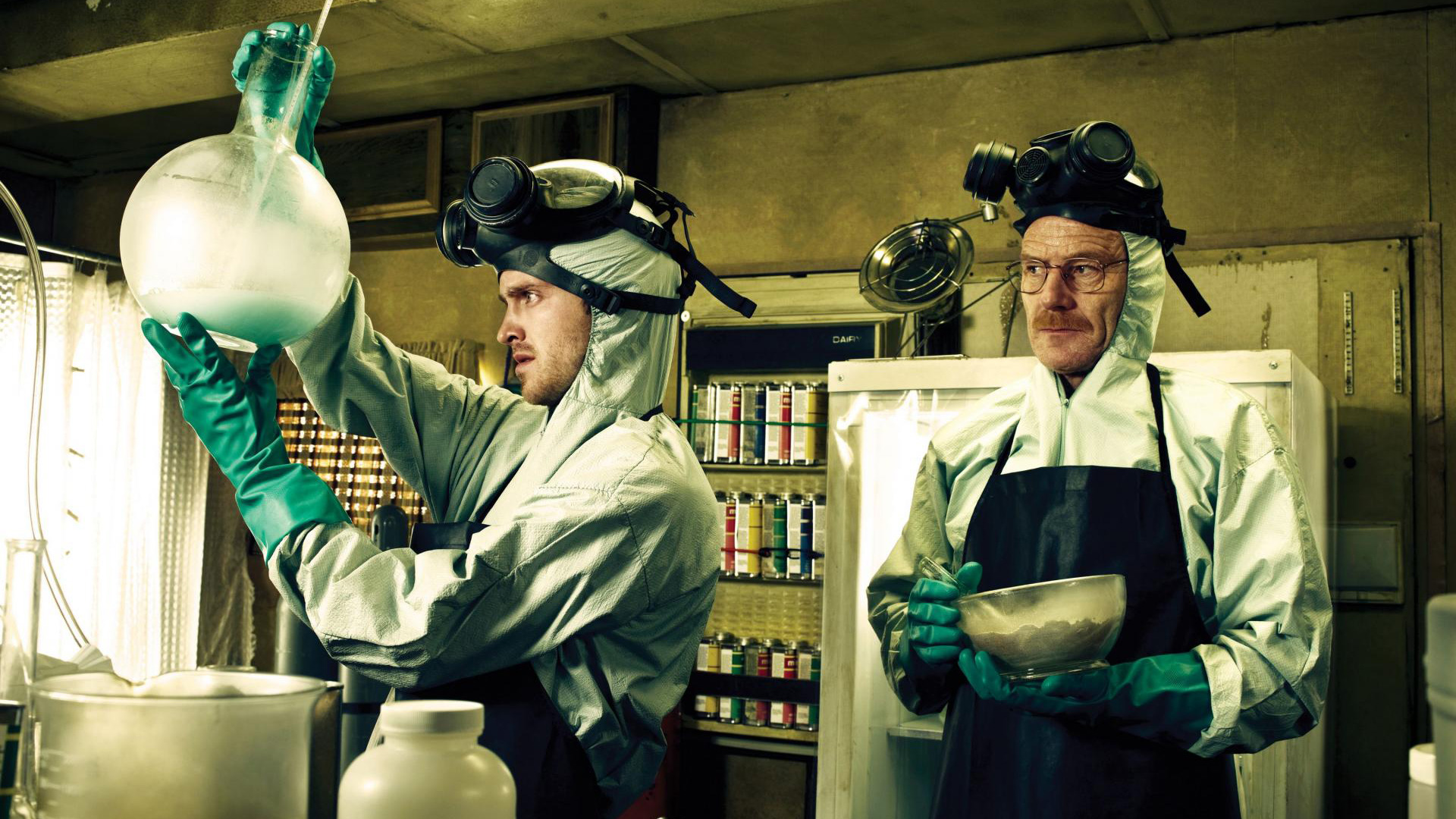
When I first began the lecture I thought the Brainbow picture were going to be what interested me the most. I thought to myself, "Oh, how pretty! These perfectly capture the art in neuroscience/our brains!" But then our professor started to talk about Freud and his works and eventually got into LSD and cocaine. Now, I'm still filling the emptiness in my soul from Breaking Bad finishing, so I'd like to talk about drugs (Walter White would argue that the process of making methamphetamine is an art in itself).
I do not advocate the use of drugs, and I am never going to use any myself, but no one can deny the humongous influence drugs have had on art. Whether drugs were used as "inspiration" for an artist or the art was birthed from a life spiraling out of control due to drug use, the two subjects always seemed to be connected. And some may say that the use of drugs just puts a person in an inebriated state that has no significance on their talent or genius for art, that it is just manipulation not inspiration. However I think there is something more to it. Drugs are about reaching a perspective that could never be reached under any other conditions- and those perspectives need to be explored just like any other aspect of life. There are so many cultural limits set up by society, boundaries do exist as much as we'd like to think that they don't. But drugs relieve us from social responsibility in a way we could never do through a sober, conscious decision. To finish I'd like to show the self-portraits of artist Bryan Lewis Saunders done under a plethora of different drugs. If this doesn't show you the unique places that drug use can take art, I don't know what will.

Resources
"CHAPTER 4: Perception Distorting Drugs." Legal Profession Assistance Conference of the Canadian Bar Association. The Canadian Bar Association, n.d. Web. 18 Nov. 2013.

"DRUGS." Bryan Lewis Saunders. N.p., n.d. Web. 18 Nov. 2013.

"Famous People and Their Drug Use." The Vaults of Erowid. Erowid.org, 4 Apr. 2012. Web. 18 Nov. 2013.

Gardner, Howard. Art, Mind, and Brain: A Cognitive Approach to Creativity. New York: Basic, 1982.
Print.


Wolf, Paul L. "The effects of diseases, drugs, and chemicals on the creativity and productivity of famous sculptors, classic painters, classic music composers, and authors." Archives of pathology & laboratory medicine 129.11 (2005): 1457-1464.